
September 1, 2026 · Roosevelt
The man in the arena
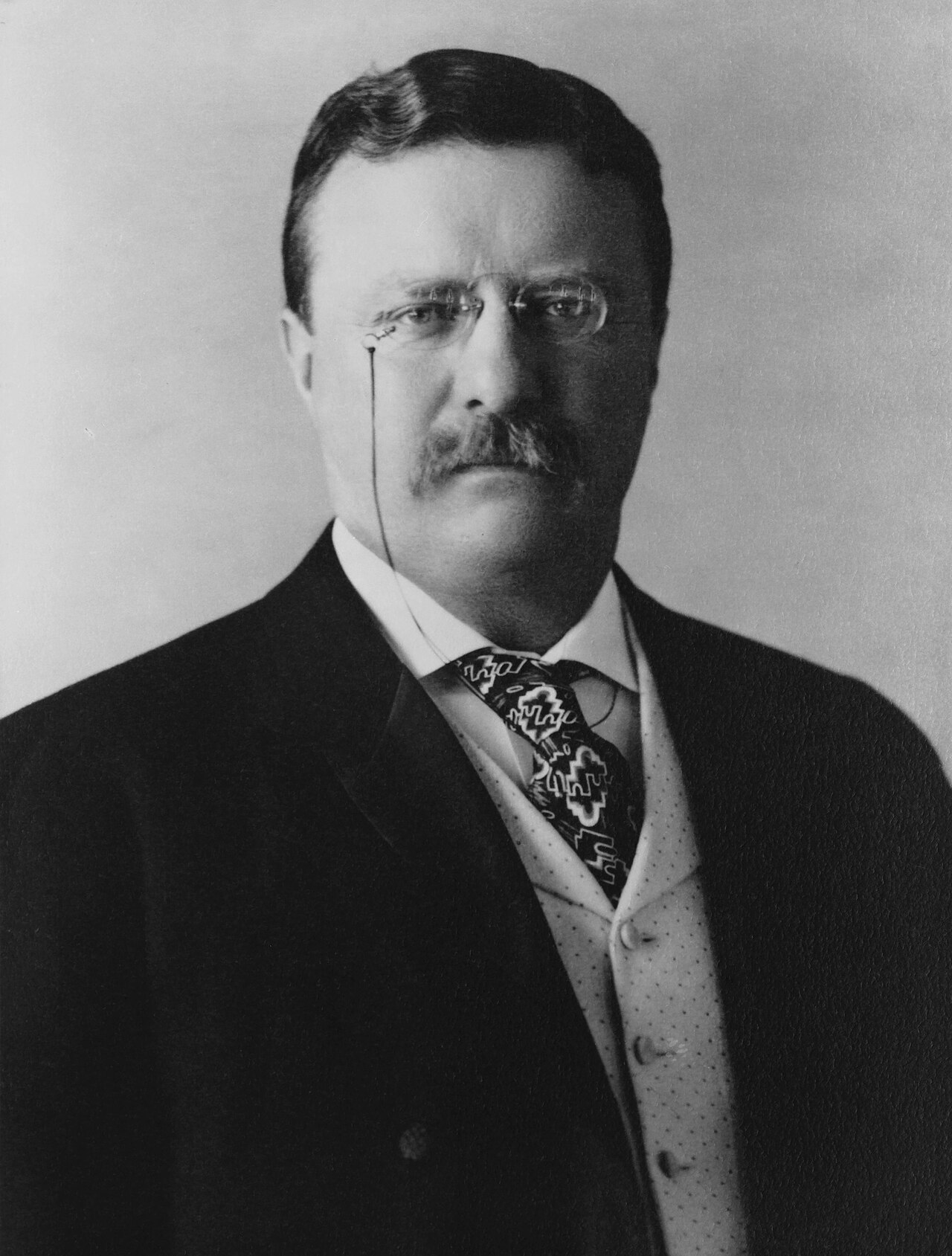
There is no recording.
That is the first thing to get straight, because the line has been treated like a soundtrack for a hundred years. On 23 April 1910, Theodore Roosevelt stood in the amphitheatre of the Sorbonne and spoke for more than an hour. The lecture was titled Citizenship in a Republic. He was fifty-one, out of the White House, traveling Europe as a private citizen. Most of the hour is forgotten. A few sentences walked out of the room and never came back.
We confuse the fame of those sentences with the work of saying them.
The speech is easy to quote. Dust, sweat, blood. The critic who counts for nothing. The man who fails while daring greatly. Printed on walls, stitched under crests, recited by people who have never read the rest of the hour. Fair enough. The language is built to travel.
What does not travel as well is the life that made the language expensive.
In February 1884, in a house on West 57th Street, his mother Martha and his wife Alice died eleven hours apart. He marked the diary with a large X and one line: The light has gone out of my life. Then he left for the Dakota Badlands. The ranch years get sold now as origin myth. They were also just a man putting distance between himself and a brownstone.
He came back the long way. New York police. The Navy Department. A volunteer cavalry regiment he did not have to join. At San Juan Hill in 1898 he rode under fire he could have watched from a desk. In 1912, campaigning in Milwaukee, a bullet stopped in his chest. He finished the speech — nearly ninety minutes — and then he went to the hospital. The body kept the score even when the crowd did not.
By the time he reached Paris he was not discovering the idea. He was sorting it.
Credit, he said, belongs to the man who is actually in the arena, whose face is marred by dust and sweat and blood; who errs, who comes short again and again; who spends himself in a worthy cause; who at the worst, if he fails, at least fails while daring greatly. The famous half of that is the critic. The harder half is the erring. He was not handing out a motto. He was describing a kind of citizen, and he was describing himself with the courtesy of the third person.
The line is public domain. The life is not.
This journal takes its name from that afternoon, which is a dangerous thing to do. Names get lazy. They start doing the looking for you. The work here is the opposite: to keep the record of what the dust actually looked like, on a particular day, for a particular person, and what it cost the people standing near them.
Roosevelt does not need the help. The passage has coffee-table books. The people who come after him in these pages often don't. That is why they are here.