
August 20, 2026 · Owens
Four golds in Berlin
Franklin Roosevelt did not invite him to the White House.
That is not the most famous fact about Jesse Owens, which is the point. The famous facts are the four gold medals, Berlin, 1936, a stadium built to stage an argument. Those get the books. The missing invitation is a quieter kind of record. It tells you what the medals were allowed to mean once the boat came home.
He was born James Cleveland Owens in Oakville, Alabama, in 1913, the son of sharecroppers, and grew up in Cleveland. At Ohio State he was already the fastest man in the country. On the road he was still not housed with the white teammates. The clock did not care. The hotels did.
Berlin gave him four events in seven days: the 100 metres, the long jump, the 200, the 4×100 relay. He won all four. In the long jump he fouled his first attempts. Luz Long, jumping for Germany, marked a takeoff farther back so Owens could qualify. Owens took the gold. The two men walked the pit together.
That walk has been turned into a fable, which is a polite way of saying people got tired of looking at it. The contemporary record is plainer. A German jumper helped an American qualify. They were photographed. Long was later killed in the war. Owens lived with the photograph for the rest of his life. None of that requires a moral painted on top.
What the medals did not do is as plain as what they did.
He came home to segregated hotels and to exhibition races that paid the bills. Four gold medals did not rewrite American law. They did force a public to watch a Black sharecropper's son beat the field the regime had assembled to prove he could not. That is not nothing. It is also not a parade.
We confuse the result with the reception.
Owens worked, spoke, went broke, recovered, and died in 1980. The Games remain the day the argument met the track. The times are still on the board. What the country did with them is a different ledger, and it is the one that takes longer to read.
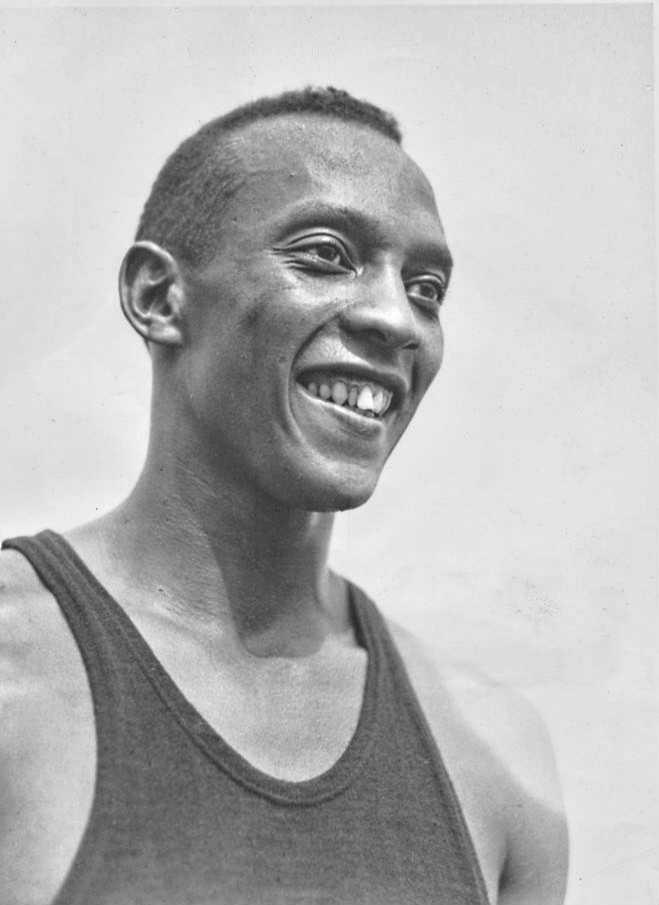
Look at the photograph. He is young. The medals are not in the frame. They never had to be. The body had already done the work, and the work did not wait to be invited in.